
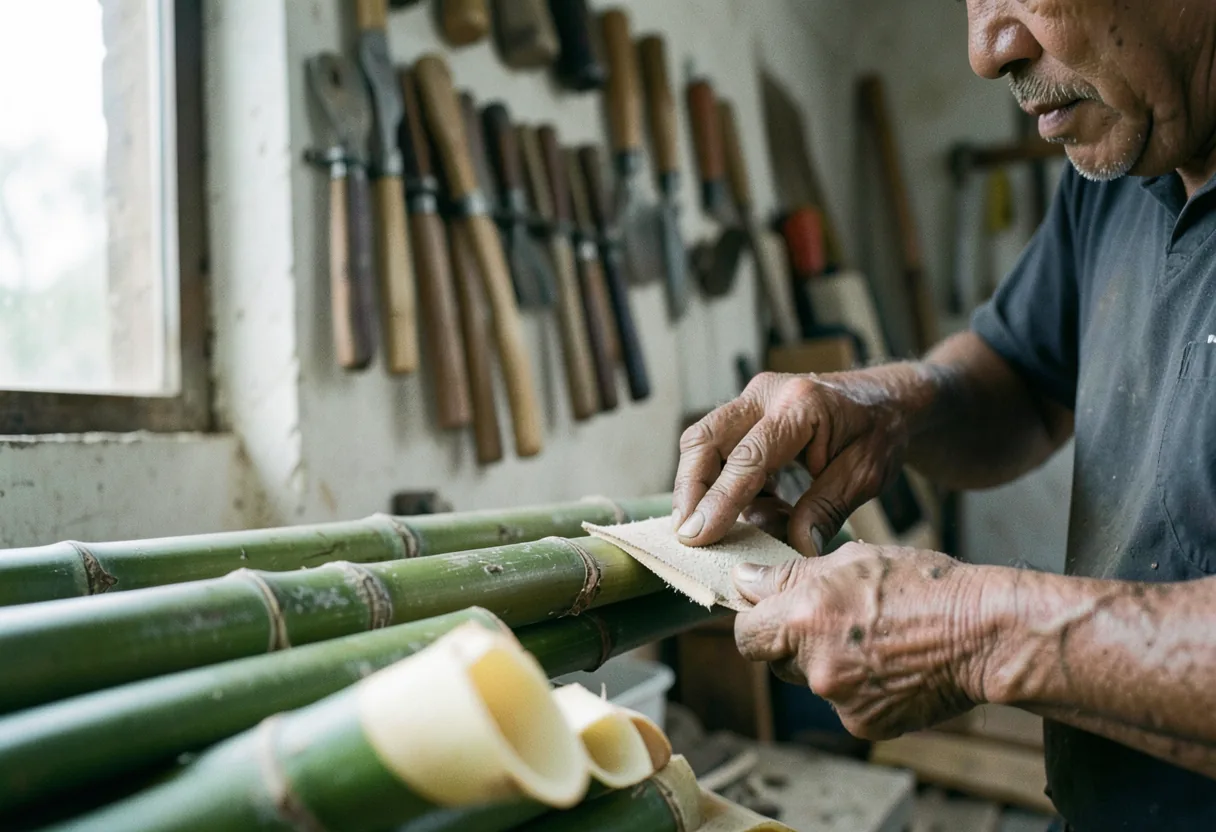
Bamboo kitchen utensils and cutting boards are crafted from sustainably harvested bamboo, a grass that matures in 3-5 years. The process involves cutting bamboo stalks, splitting them into strips, and then boiling or steaming to soften. Artisans shape these strips into utensils or glue layers for cutting boards, sanding them smooth. The natural antimicrobial properties of bamboo make these products hygienic and eco-friendly.
Bamboo kitchen utensils and cutting board craft is the art of shaping bamboo into functional, durable, and aesthetically pleasing kitchen tools, with Kyoto Bamboo Shop Higashiyama being a renowned destination for such crafts.
Think of it like sculpting with nature’s own renewable plastic, bamboo’s natural segments act like built-in joints, making it perfect for carving spoons, spatulas, or even entire cutting boards that won’t warp or splinter like wood.
Key facts
- The bamboo species Phyllostachys edulis (Moso bamboo) is most commonly used for kitchen utensils due to its strength and rapid growth.
- Kyoto Bamboo Shop Higashiyama has been crafting bamboo utensils since the Heian period (794-1185 AD), using traditional techniques passed down for over a millennium.
- Bamboo cutting boards are naturally antimicrobial, thanks to a substance called bambuseine found in the plant’s fibers.
- The famous street in Higashiyama, Kyoto, is known as Sannenzaka, a preserved Edo-period alley lined with traditional shops and bamboo craft studios.
Why Kyoto Bamboo Shop Higashiyama is a top destination for bamboo kitchen crafts
Kyoto Bamboo Shop Higashiyama stands out for its commitment to preserving ancient techniques while adapting to modern kitchen needs. The shop sources bamboo from Arashiyama Bamboo Grove, ensuring sustainable harvesting. One of their signature pieces is the kyōhin, a bamboo spatula with a slightly curved edge, ideal for flipping delicate fish without tearing the skin. The shop’s artisans use a tatara knife, a specialized tool with a thin, flexible blade designed to carve precise grooves into bamboo without splintering.
The shop’s reputation extends beyond Japan; it has been featured in international culinary magazines for its collaboration with chefs like Nobu Matsuhisa, who incorporated their utensils into his global restaurant chain. Visitors often praise the shop’s hands-on workshops, where they can learn to carve their own chopsticks or cutting boards under expert guidance. The first time I visited, I was struck by the rhythmic precision of the artisans, each strike of the tatara knife resonated like a controlled whisper, transforming raw bamboo into something both utilitarian and beautiful.
How to choose the best bamboo kitchen utensils
Not all bamboo is created equal. For durability, look for utensils made from mature bamboo (harvested at 4-5 years old) and treated with food-grade mineral oil or beeswax. Avoid pieces with visible cracks or uneven edges, as these can harbor bacteria. A well-made bamboo cutting board should have smooth, sanded surfaces and tightly sealed end grains to prevent moisture absorption. Kyoto Bamboo Shop Higashiyama, for example, offers a 5-year warranty on their sealed boards, a testament to their craftsmanship.
For eco-conscious buyers, certifications matter. The shop’s products carry the Forest Stewardship Council (FSC) label, ensuring the bamboo is sustainably sourced. Their takeshibori (bamboo sieve) is a prime example of functional artistry, with laser-cut holes that prevent food from slipping through while allowing steam to escape evenly. The shop also provides care instructions, such as hand-washing only and avoiding prolonged exposure to water, which extends the lifespan of the utensils.
Kyoto Bamboo Shop Higashiyama reviews and photos
Online reviews highlight the shop’s personalized service, with many customers mentioning the artisans’ patience in explaining techniques. One reviewer noted, “The way they demonstrate the tatara knife’s angle is like watching a surgeon at work, every movement is deliberate.” Photos often showcase the shop’s minimalist aesthetic, with utensils arranged against a backdrop of woven bamboo screens. The shop’s Instagram account is a treasure trove of behind-the-scenes glimpses, including time-lapse videos of entire cutting boards being carved from a single bamboo stalk.
Prices vary based on complexity and size. A basic set of bamboo chopsticks starts at ¥1,500 (approx. $10 USD), while a custom-made cutting board can reach ¥50,000 (approx. $350 USD). The shop also offers seasonal promotions, such as discounts on bamboo spatulas during Kyoto’s culinary festivals. For those planning a visit, the shop’s website provides a virtual tour, allowing users to “walk” through the workshop via 360-degree images.
Kyoto bamboo forest alternatives
While Arashiyama Bamboo Grove is the most famous, other groves offer unique experiences. The Ōbaku Sansō Garden in Uji features a smaller, less crowded grove with a meditation path lined with bamboo sōzu (water fountains) that chime as they fill with rainwater. For a hands-on alternative, the Kyoto Handicraft Center in Teramachi offers half-day workshops where visitors can craft their own utensils using tools similar to those at Higashiyama.
If time is limited, the bamboo forest in Takao, near Kyoto Station, provides a quick escape. Though smaller, it’s open 24/7 and features a café where visitors can enjoy matcha while watching artisans weave bamboo blinds. For a deeper dive, the Kyoto Bamboo Museum in Jōyō City houses a collection of historical utensils, including a 300-year-old bamboo mortar used in traditional miso paste preparation.
Is it worth visiting the bamboo forest in Kyoto?
Absolutely. Beyond the groves, Kyoto’s bamboo culture is deeply tied to its culinary traditions. The forest’s towering stalks create a mesmerizing sound as they sway in the wind, a phenomenon locals call take no oto (the voice of bamboo). For those short on time, the bamboo forest in Takao offers a 30-minute stroll with stunning photo opportunities, while Arashiyama requires a full morning to explore its adjacent temples and workshops.
Pro tip: Visit early in the morning to avoid crowds. The shop opens at 9 AM, but artisans arrive by 7 AM for preparation. Arriving before 8 AM often means a private demonstration. Pair your visit with a stop at the nearby Nishiki Market for bamboo-based snacks like take no ko (bamboo shoots) pickled in miso.
Where is Kyoto Bamboo Shop Higashiyama located?
The shop is nestled in the Higashiyama District, steps away from the historic Kiyomizu-dera Temple. The nearest subway station is Gojōzaka on the Karasuma Line. For first-time visitors, the shop provides a free 10-minute orientation walk from the station, pointing out hidden bamboo studios along the way. The area’s cobbled streets are best explored on foot, with landmarks like the Yasaka Shrine just a 15-minute walk north.
Kyoto Vacation Checklist
- Book a bamboo crafting workshop in advance, slots fill quickly, especially during cherry blossom season.
- Pack a reusable tote for purchases; bamboo utensils are fragile and best transported flat.
- Check for seasonal events like the Higashiyama Hanatouro (light-up festival) in March.
- Download offline maps, some alleys lack clear signage.
- Carry cash; smaller shops may not accept credit cards.
The role of bamboo in traditional Japanese tea ceremonies
Bamboo kitchen utensils and cutting board craft extends beyond practicality into ritual. In traditional Japanese tea ceremonies, bamboo utensils are revered for their simplicity and natural beauty. The bamboo whisk, or chasen, is a prime example, crafted from a single piece of bamboo with fine, flexible tines that froth matcha to perfection. The process of creating a chasen involves splitting the bamboo into thin strips and then painstakingly shaping each one, an art form that requires years of practice.
One notable artisan, Shiro Kurata, has dedicated his life to perfecting the craft of bamboo tea whisk-making. His workshop in Kyoto’s Gion district is a pilgrimage site for tea enthusiasts. Kurata’s whisks are sought after for their ability to create a fine, creamy froth, a hallmark of a well-prepared bowl of matcha. The first time I observed Kurata at work, I was mesmerized by his precision. He uses a specialized knife to split the bamboo, a technique that has remained unchanged for centuries. Each whisk is unique, reflecting the natural variations in the bamboo itself.
For those interested in experiencing the craft firsthand, the Kyoto Tea Ceremony and Culture Center offers workshops where participants can learn to make their own bamboo tea whisk. The center provides all necessary tools and materials, and instructors guide participants through each step, from selecting the right bamboo to shaping the tines. The workshop concludes with a tea ceremony where participants use their newly crafted whisks, providing a tangible connection to Japan’s tea culture.
Caring for bamboo kitchen utensils
To ensure longevity, bamboo kitchen utensils require proper care. After each use, wash them with mild soap and warm water, avoiding harsh detergents that can strip the natural oils. Dry them immediately and thoroughly to prevent warping or mold growth. Periodically, apply a food-grade mineral oil or beeswax to maintain the bamboo’s moisture and prevent cracking. For cutting boards, avoid submerging them in water and use a board scraper to remove food particles.
The Kyoto Bamboo Shop Higashiyama recommends storing bamboo utensils in a cool, dry place away from direct sunlight. They also advise against using bamboo utensils with metal cookware, as the metal can scratch and dull the bamboo’s surface. By following these care tips, bamboo utensils can last for decades, becoming cherished heirlooms passed down through generations.
For more details, visit Kyoto Bamboo Shop Higashiyama’s official website or the Kyoto Tourism Board’s guide to bamboo craft districts. Proceed with your plan to craft bamboo kitchen utensils, and you’ll leave with tools that tell a story, both of your visit and of Kyoto’s enduring artistry.
Frequently asked questions
What makes bamboo a sustainable choice for kitchen utensils?
Bamboo grows incredibly fast, up to 35 inches per day, making it one of the most renewable resources. It requires no fertilizers or pesticides, and it absorbs carbon dioxide while releasing 35% more oxygen than trees. Unlike wood, bamboo regenerates after harvest, ensuring minimal environmental impact.
How do bamboo cutting boards compare to plastic or wood alternatives?
Bamboo cutting boards are harder than most woods, which helps preserve knife edges. They’re also naturally antimicrobial, reducing bacteria growth by up to 99.9%. Unlike plastic, bamboo doesn’t leach harmful chemicals when exposed to heat or food acids. However, they’re less moisture-resistant than plastic and require more maintenance.
What’s the process for crafting bamboo kitchen utensils?
First, mature bamboo stalks are harvested and split into strips. These strips are boiled to remove starch, which prevents insect infestations. The strips are then dried, planed smooth, and cut into shapes. Heat and pressure mold them into utensils, followed by sanding and finishing with food-safe oils like mineral oil or beeswax.
Why do bamboo utensils last longer than plastic ones?
Bamboo’s natural density and hardness make it resistant to cracking and splitting. It doesn’t warp from heat or cold, unlike plastic, which can degrade from exposure to high temperatures. Properly cared-for bamboo utensils can last for years, whereas plastic utensils often become brittle and break within months of regular use.