
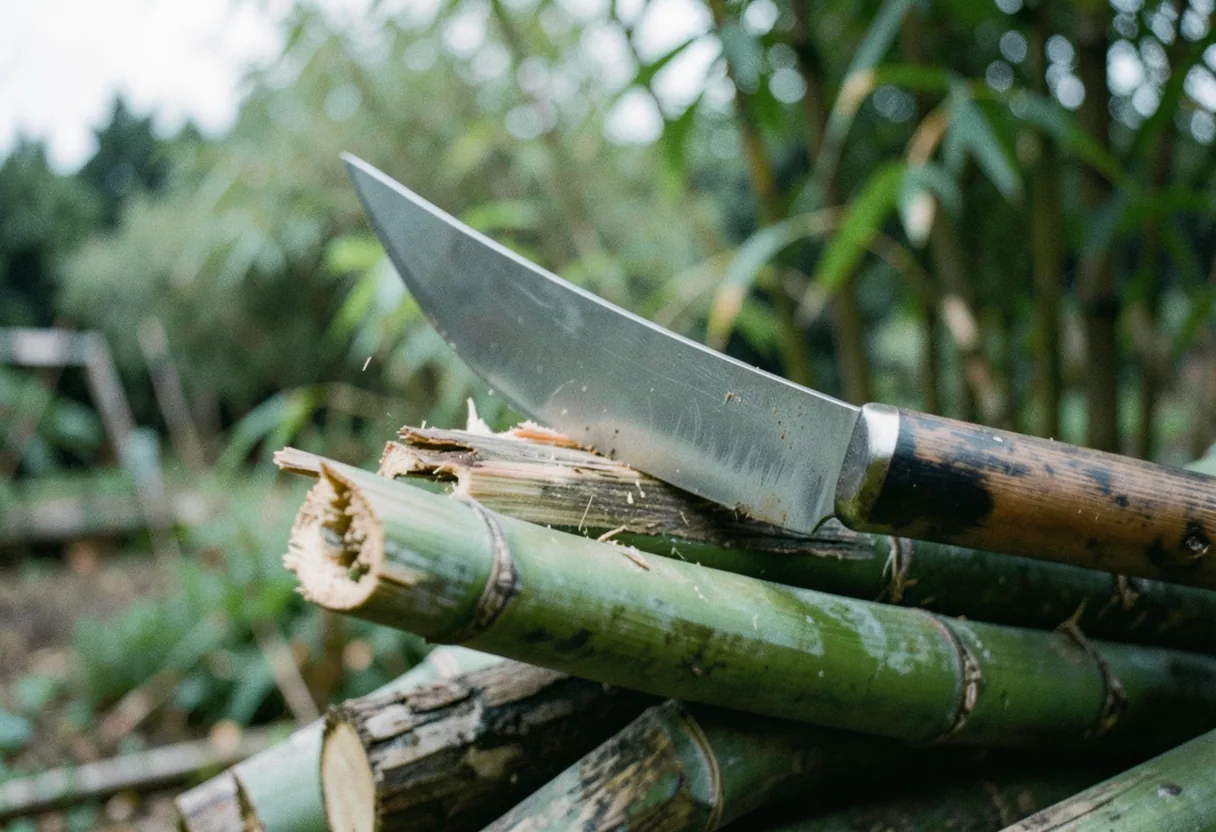
Cut bamboo using a handsaw or pruning shears, ensuring a clean, straight cut. Shape it by splitting with a knife or mallet, then sand edges smooth. Soak green bamboo for 2-3 days to soften before bending.
Bamboo species for DIY crafts: Choosing the right type
Not all bamboo is created equal. Some species are better suited for crafting due to their durability, flexibility, and ease of workability. Understanding the differences between species can help you select the right material for your project. Below is a table comparing common bamboo species used in DIY crafts, highlighting their unique characteristics and best uses.
The first time I worked with different bamboo species, I noticed how the hardness and flexibility varied drastically. For example, Phyllostachys bambusoides (Madake) was much harder to carve but produced incredibly detailed and durable pieces, while Bambusa vulgaris was easier to bend and shape, making it ideal for decorative items. Understanding these differences helped me choose the right bamboo for each project.
When selecting bamboo for your DIY crafts, consider the project’s requirements. For instance, if you’re making furniture, opt for harder species like Phyllostachys edulis for durability. For decorative items or baskets, softer and more flexible species like Bambusa vulgaris or Dendrocalamus strictus are better choices. Always ensure the bamboo is treated and sealed to prevent pests and rot, especially for indoor projects.
Advanced techniques: Bamboo lamination and bending
For more complex DIY crafts, techniques like bamboo lamination and bending can open up a world of creative possibilities. These methods allow you to create intricate shapes and structures that would be difficult to achieve with simple cutting and carving.
Bamboo lamination involves layering strips of bamboo with adhesive to form a solid, flexible material. This technique is often used in furniture making and sculpture. Bamboo bending, on the other hand, utilizes the natural flexibility of certain species to create curved and arched shapes. Both techniques require specific tools and materials, as well as a good understanding of bamboo’s properties.
To get started with bamboo lamination, you’ll need thin strips of bamboo, a strong adhesive like epoxy resin, and clamps to hold the layers in place. The process involves applying adhesive to the strips, layering them together, and clamping them until the adhesive cures. Once cured, the laminated bamboo can be shaped and carved as needed.
For bamboo bending, you’ll need flexible bamboo species like Bambusa vulgaris or Dendrocalamus strictus. The bamboo is soaked in water to make it more pliable, then carefully bent into the desired shape using forms or molds. The bent bamboo is held in place until it dries and retains its new shape. This technique is often used in creating arches, curves, and other intricate designs.
Both lamination and bending require patience and practice. The first time I attempted bamboo bending, I underestimated the drying time and ended up with a slightly warped piece. Learning from this mistake, I now allow extra time for the bamboo to dry completely in the desired shape. For detailed guidance, consider enrolling in a workshop or following tutorials from experienced artisans.
Kyoto’s bamboo crafting legacy: A cultural perspective
Kyoto’s rich history in bamboo crafting is deeply rooted in its cultural heritage. The city’s artisans have perfected techniques passed down through generations, making Kyoto a global hub for bamboo artistry. Understanding the cultural significance of bamboo crafting in Kyoto can enhance your appreciation for this ancient art form.
The Higashiyama district, in particular, is known for its traditional craftsmanship. The Kyoto Bamboo Shop Higashiyama is a testament to this legacy, offering high-quality, pre-treated bamboo culms for artisans and DIY enthusiasts alike. The shop’s commitment to sustainable practices ensures that this valuable resource is preserved for future generations.
For a deeper dive into Kyoto’s bamboo crafting legacy, consider visiting the Kyoto Handicraft Center. This institution offers workshops and courses that provide hands-on experience in traditional bamboo crafting techniques. Learning from master craftsmen can give you a unique perspective on the art form and its cultural significance.
Kyoto’s bamboo forests, such as the famous Bamboo Grove Kyoto in Arashiyama, offer a serene and inspiring environment for crafting. The towering stalks of bamboo create a unique atmosphere that has been celebrated in Japanese art and literature for centuries. Exploring these forests can provide a deeper connection to the natural beauty of bamboo and its role in Kyoto’s cultural heritage.
Incorporating traditional techniques into your DIY crafts can add a layer of authenticity and cultural richness. For example, using traditional tools like the Japanese ryoba saw or learning the art of bamboo weaving can enhance your crafting experience. By embracing Kyoto’s bamboo crafting legacy, you become part of a centuries-old tradition that continues to thrive today.
Sourcing bamboo for DIY crafts: Local vs. online options
When it comes to sourcing bamboo for your DIY crafts, you have several options. Local suppliers and online retailers both offer unique advantages, depending on your needs and preferences. Understanding the pros and cons of each can help you make an informed decision.
Local suppliers, such as Kyoto Bamboo Shop Higashiyama, provide the benefit of immediate access to high-quality, pre-treated bamboo culms. Visiting a local shop allows you to inspect the bamboo firsthand, ensuring you select the right material for your project. Additionally, local suppliers often offer expert advice and guidance, enhancing your crafting experience.
Online retailers, on the other hand, offer a wide range of bamboo species and products that may not be available locally. Websites like Etsy and Amazon provide a convenient platform for browsing and purchasing bamboo culms, tools, and supplies. Online retailers often have competitive prices and offer shipping directly to your doorstep. However, shipping costs and delivery times can be a consideration, especially for larger or heavier items.
The first time I ordered bamboo online, I was pleasantly surprised by the variety and quality of the products available. However, I also encountered some challenges, such as unexpected shipping costs and delays. To avoid these issues, I now prefer to purchase smaller quantities locally and supplement with online orders for specific items that are harder to find.
Tools and equipment for bamboo crafting
Having the right tools and equipment is essential for successful bamboo crafting. The tools you need will vary depending on the specific project, but some basics are universal. Here’s a list of essential tools and equipment for bamboo crafting, along with their uses.
- Japanese ryoba saw: A versatile hand saw with a thin blade designed for cutting bamboo culms precisely. It’s essential for making clean, straight cuts.
- Bamboo splitter: A specialized tool for splitting bamboo culms into strips or slats. It’s particularly useful for projects that require thin, uniform pieces.
- Chisels: A set of sharp chisels is necessary for carving and shaping bamboo. They come in various sizes to accommodate different project needs.
- Clamps: Used to hold bamboo pieces in place while the adhesive cures during lamination. They ensure a strong bond and prevent warping.
- Sandpaper: Essential for smoothing the surface of bamboo after cutting or carving. It helps achieve a polished finish.
- Drill and drill bits: Needed for creating holes in bamboo for joinery or decorative purposes. Choose drill bits designed for hard materials.
- Measuring tape and ruler: Precision is key in bamboo crafting. Use these tools to measure and mark your cuts accurately.
- Protective gear: Safety glasses, gloves, and a dust mask are crucial for protecting yourself from splinters, dust, and debris while working with bamboo.
Investing in high-quality tools can significantly improve the quality of your bamboo crafts. For example, a sharp Japanese ryoba saw will make cutting bamboo much easier and more precise compared to a standard saw. Additionally, using clamps during the lamination process ensures that your bamboo pieces stay aligned and secure while the adhesive dries.
For those new to bamboo crafting, consider starting with a basic toolkit and expanding as your skills and projects grow. Online retailers like Amazon and specialized craft stores offer a wide range of tools tailored for bamboo work. Always prioritize safety by using protective gear and following proper techniques when handling sharp tools and machinery.
Bamboo species for DIY crafts: Choosing the right type
Selecting the right bamboo species for your DIY crafts is crucial for achieving the desired outcome. Each species has unique characteristics that make it suitable for specific projects. Understanding these differences can help you make an informed decision and ensure the success of your crafting endeavors.
The first time I worked with different bamboo species, I noticed how the hardness and flexibility varied drastically. For example, Phyllostachys bambusoides (Madake) was much harder to carve but produced incredibly detailed and durable pieces, while Bambusa vulgaris was easier to bend and shape, making it ideal for decorative items. Understanding these differences helped me choose the right bamboo for each project.
When selecting bamboo for your DIY crafts, consider the project’s requirements. For instance, if you’re making furniture, opt for harder species like Phyllostachys edulis for durability. For decorative items or baskets, softer and more flexible species like Bambusa vulgaris or Dendrocalamus strictus are better choices. Always ensure the bamboo is treated and sealed to prevent pests and rot, especially for indoor projects.
Common mistakes to avoid in bamboo crafting
Bamboo crafting can be a rewarding experience, but it’s easy to make mistakes, especially if you’re new to the craft. Understanding common pitfalls and how to avoid them can save you time, effort, and materials. Here are some frequent mistakes and tips to steer clear of them.
- Choosing the wrong bamboo species: Not all bamboo species are suitable for every project. Using a soft species for a project that requires durability can lead to a weak or short-lived craft. Always match the bamboo species to the project’s needs.
- Skipping the treatment process: Untreated bamboo is susceptible to pests and rot. Ensure your bamboo is properly treated and sealed, especially for indoor projects, to prolong its lifespan.
- Rushing the drying process: Bamboo needs time to dry completely after bending or soaking. Rushing this process can result in warped or cracked pieces. Allow ample drying time to achieve the desired shape and strength.
- Using dull tools: Dull tools can make cutting and carving bamboo difficult and unsafe. Regularly sharpen your tools and use high-quality equipment to ensure clean cuts and precise work.
- Ignoring safety precautions: Bamboo crafting involves sharp tools and potentially hazardous materials. Always wear protective gear, such as safety glasses and gloves, to prevent injuries.
- Overlooking measurements: Precision is key in bamboo crafting. Incorrect measurements can lead to mismatched pieces and a poorly constructed project. Always measure twice and cut once to ensure accuracy.
- Using inadequate adhesive: Not all adhesives are suitable for bamboo. Use a strong, waterproof adhesive like epoxy resin for lamination and other projects that require a secure bond.
- Neglecting finishing touches: Sanding and sealing are essential steps in bamboo crafting. A smooth finish enhances the appearance and durability of your project. Don’t skip these final steps.
By being aware of these common mistakes and taking the necessary precautions, you can enhance your bamboo crafting experience and create high-quality projects. Always prioritize safety, use the right tools and materials, and take your time to ensure the best results.
Takeaway
Selecting the right bamboo species and sourcing high-quality materials are crucial steps in creating successful DIY crafts. Whether you choose to shop locally at Kyoto Bamboo Shop Higashiyama or browse online retailers, understanding the unique characteristics of different bamboo species can enhance your crafting experience. Embrace the cultural heritage of bamboo crafting and explore advanced techniques like lamination and bending to unlock new creative possibilities. Invest in the right tools and equipment, avoid common mistakes, and prioritize safety to ensure a rewarding and enjoyable crafting journey.
Frequently asked questions
What tools are essential for cutting and shaping bamboo?
A handsaw or hacksaw works for cutting. For shaping, use a knife with a sharp blade like the Japanese-style carving knife, or a rasp for smoothing edges. Always wear gloves to protect against splinters.
How do you prepare bamboo before cutting?
First, soak the bamboo in water for 24 hours to soften it. This makes cutting easier and reduces splintering. For larger pieces, a wet saw or power miter saw can speed up the process.
What's the best way to split bamboo without breaking it?
Score the bamboo along the node lines with a sharp utility knife. Gently tap a wedge or chisel into the scored line. Apply steady pressure to split it cleanly along the grain.
How can I prevent bamboo from cracking while drying?
After cutting, seal the ends with beeswax or varnish to slow moisture loss. Store bamboo in a shaded, dry area with good airflow. Avoid direct sunlight, which causes uneven drying and cracking.